 Wine inventory is often the largest asset a winery owns after its land, and it is usually the hardest to value well. In an ordinary year, the question is what the wine will bring through the winery’s normal channels. In a year like this one, more and more often the question is what it will bring if it has to be sold, on someone else’s timeline, by someone who didn’t make it.
I’ve valued wine inventory alongside winery equipment in litigation and lending matters, working with experienced winery consultants who taste, price, and place wine for a living. This post draws on those engagements, with every client, location, and case figure left out, and on public data about where the market stands. It’s written for lenders, bankruptcy and business attorneys, receivers, and CPAs who may soon be asked to put a number on a cellar full of wine. A companion post covers the other side of the winery, wine tanks and bottling lines.
A Market Holding Too Much Wine
California’s wine business has spent the last several years with more wine than it can sell. Shipments of California wine were essentially flat at about 273 million cases from 2019 through 2021, then fell to roughly 230 million cases by 2023, according to Wine Institute figures. The pandemic briefly disguised the trend. People drank at home, direct-to-consumer sales jumped, and the 2021 and 2023 crops rebounded. Many wineries made and bought wine as if the recovery were real.
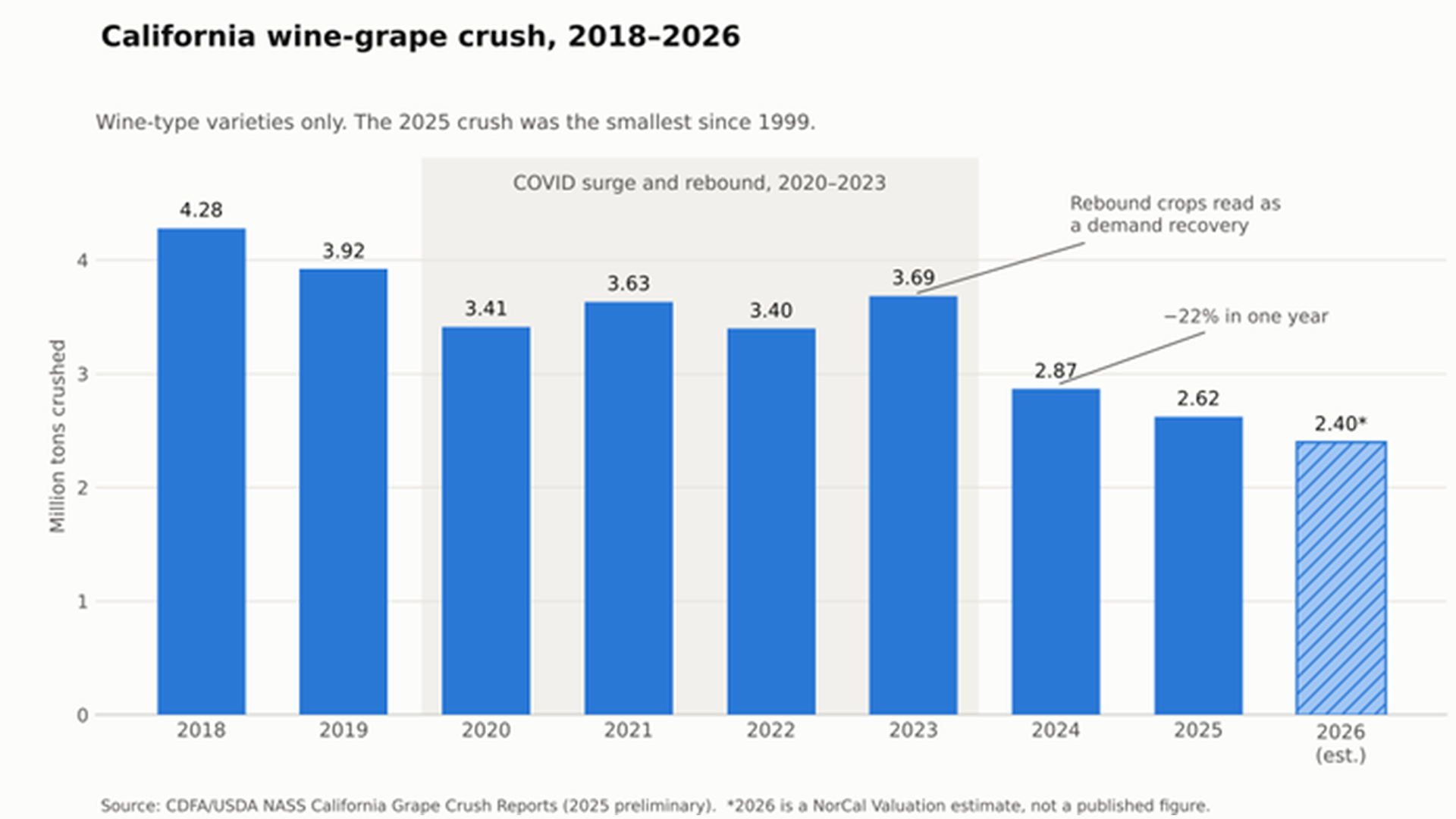
Figure 1. California wine-grape crush, 2018 to 2026 (million tons)
Source: CDFA/USDA NASS California Grape Crush Reports, wine-type varieties only. The 2026 bar is my own estimate based on acreage removals and early reports of a light harvest; it is not a published figure.
The correction has come through the grape supply. The 2024 wine-grape crush was 22 percent smaller than 2023’s, and the 2025 crush was the smallest since 1999. Those numbers understate how much fruit had no home. Industry estimates put about 400,000 tons of grapes left unpicked in 2024 and about 820,000 tons in 2025, roughly a quarter of the crop, as reported by Ag Alert. Growers have pulled close to 85,000 acres of vines in under two years, according to mapping studies commissioned by the California Association of Winegrape Growers, including the 2026 Winegrape Mapping Project released this month.
For inventory, the number to watch is how many months of wine are sitting in the system. Wineries generally aim to hold about 18 months of finished wine. According to the Gomberg Fredrikson Report, as cited by Ag Alert, inventories reached 21.7 months by the end of 2023 and had worked down to about 19 months by the end of 2025. That’s progress, but it means the market is still carrying more wine than it needs, and the wine that sells first is not likely to be wine coming out of a distressed seller.
Prices Fell and Outlets Narrowed
Bulk wine prices fell by more than half between early 2023 and mid-2024, by broker accounts, and many sellers couldn’t find buyers at any price. Wineries that would normally have bought bulk wine to fill out a program had wine of their own to move.
The channels for finished goods have narrowed as well. Several Canadian provinces pulled American alcohol from their shelves in March 2025. U.S. wine exports fell 35 percent in 2025 to about $805 million, with Canada accounting for roughly 80 percent of the decline, according to the Los Angeles Times, and the Wine Institute now puts cumulative lost export value for California wineries at about $522 million. At home, Republic National Distributing Company announced in 2025 that it would wind down its California business, filing notices for more than 1,700 layoffs. Distributors are carrying fewer brands, not more.
The large producers are consolidating too. Constellation Brands sold its mainstream wine brands, with their inventory, wineries, and vineyards, to The Wine Group in June 2025, and Gallo has closed or idled several California facilities since 2024. When the biggest buyers of wine and brands are shrinking, there are fewer places for a distressed seller’s wine to go.
Why I Expect More Compelled Sales in 2027
I’m an appraiser, not an economist, so take this as a working hypothesis rather than a forecast. I expect 2027 to bring more foreclosures, receiverships, and bankruptcy-driven sales in California wine than 2026 did, and inventory will be at the center of many of them.
A lot of winery debt was written between 2018 and 2021, when inventory and land values were high and rates were low. Starting rates on wine industry loans have risen from under 4 percent in 2021 to roughly 6 to 8.5 percent today, according to Azur Associates as reported by the San Francisco Chronicle. The same reporting describes lenders moving from asset-based to cash-flow underwriting, property and inventory values coming down, and lenders rejecting sale offers that fell short of the debt. A Napa winery faced a foreclosure auction this fall, and one of Sonoma’s oldest family wineries filed Chapter 11 in September. A running tally for 2026 counts 16 California wine producers with closures, job cuts, or bankruptcy filings so far this year.
Brand-heavy producers sitting on large finished-goods inventories, financed against values set before the downturn, are the ones I’d watch most closely. For their lenders, the inventory in the borrowing base may be worth a good deal less in a sale than it is on the balance sheet.
Premise of Value Comes First
The first question in any wine inventory valuation is which value. The answer changes the number more than any other input.
Fair market value as part of a going concern assumes the wine sells along with the winery, its equipment, its tasting room, its wine club, and its customer list. The buyer steps into the existing business and can sell the wine through the same channels, at the same price points, over a normal selling period. One common way to estimate it starts from the wine’s suggested retail price and deducts for the realistic mix of channels and discounts, then tests the result against what comparable wines have sold for. Because the channel mix is so important, the result can swing widely when sales records aren’t available, and a credible report will say so.
Orderly liquidation value assumes something quite different: the wine sells by itself, in large lots, on a wholesale basis, within a limited but reasonable period, with the seller compelled to sell. Forced liquidation value shortens that period further, typically to an auction or a single bulk buyer. Under either premise, the tasting room, the club, and the mailing list are usually gone, and so is most of the retail margin.
In one recent assignment, the orderly liquidation value of a winery’s inventory came to a small fraction of its going-concern value. That isn’t unusual right now, and it’s the gap lenders and courts most need to understand.
The Form of the Wine Matters
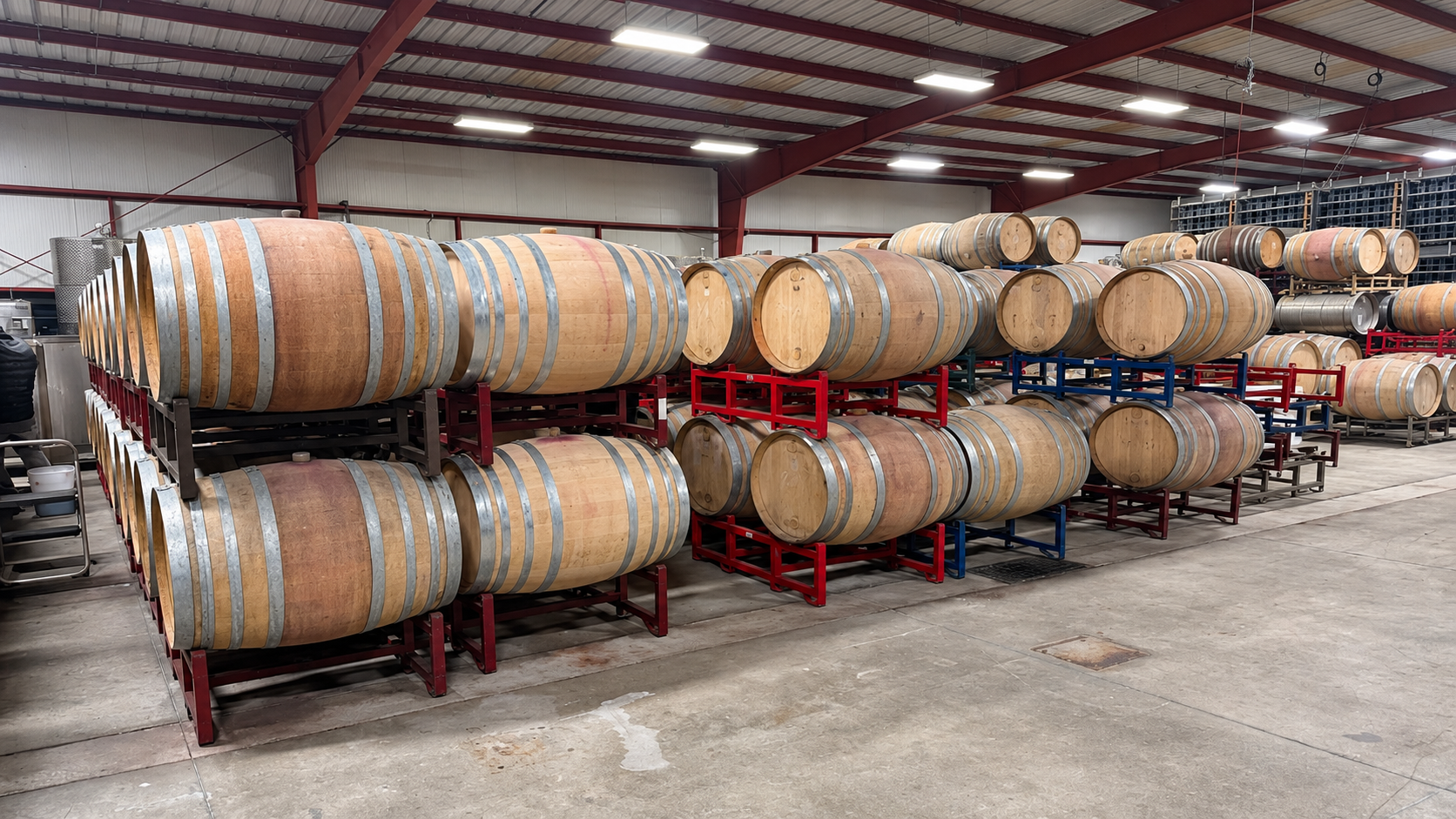
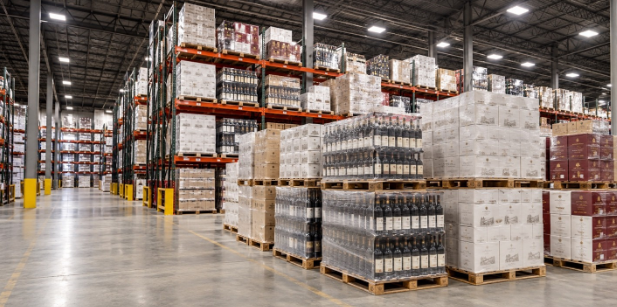
Not all wine inventory is the same asset. Cased goods with approved labels are the most marketable, though in a liquidation they often go to closeout retailers and online flash-sale sites at deep discounts. Bottles that are capped but unlabeled, called shiners in the trade, can be relabeled by a buyer with its own brand, but they sell at a steep discount to finished goods because the buyer takes on the label approvals, the packaging, and the marketing. Bulk wine in tank or barrel is a commodity priced by the gallon, and it has been the weakest segment of the market.
For bulk wine, labeling rules affect value. Under federal rules, a wine labeled with a single grape variety generally must contain at least 75 percent of that variety, and a wine labeled with an American Viticultural Area generally must be at least 85 percent from that area. Bulk wine with a documented variety, appellation, and vintage gives a buyer flexibility that an undocumented blend doesn’t. Good cellar records are worth real money in a sale.
Sparkling wine, library wines, and large-format bottles each have their own small markets and need to be looked at separately.
Timing Can Matter as Much as Price
Wine selling runs on a calendar. Retail and distributor buyers generally commit their October-through-December holiday programs in July and August. Wine offered in late fall arrives after the buying is done, and very little demand returns until the spring purchasing cycle. A seller who can wait can capture that later demand. A seller who must close within weeks, as a receiver or a lender often must, will have to cut price deeply to find buyers.
That seasonality belongs in the valuation. Two identical inventories can have very different liquidation values depending on whether they are exposed to the market in May or in November.
Regulation Follows the Wine
Wine is one of the more heavily regulated assets a lender can hold, and the rules shape who can buy it and how.
Wine on bonded winery premises hasn’t yet paid federal excise tax. Removing it from bond for sale makes the tax due, while transfers between bonded premises generally can move wine without paying the tax first. That means the natural buyers for bulk wine are other bonded wineries, and the excise tax has to be accounted for in any sale outside that circle. In California, sales to retailers generally run through licensed distributors, and selling wine directly to consumers requires the right state license. A lender or receiver who isn’t licensed may need to sell through someone who is, or obtain the authority to keep operating under the winery’s existing permits.
Labels and brands are a separate question. Federal label approvals (COLAs) belong to the brand owner, and the trademarks may be separate collateral, part of a different sale, or not available at all. A buyer of cased goods needs the right to sell under the existing labels; a buyer who can’t get it is buying shiners in all but name. I’d urge counsel to sort out licensing, bond status, and brand rights early, because until they’re settled, nobody can say with confidence what the wine will bring.
I’m not a regulatory attorney, and these rules have exceptions. The point for valuation is that every one of them narrows the buyer pool or adds cost, and the appraisal has to reflect that.
Quality Is an Assumption Until It’s Tested
The value of wine depends on what’s in the bottle, and that has to be confirmed rather than assumed. On the inventories I’ve worked with, an experienced winery consultant selected wines to sample from the inventory list and tasted them for soundness and commercial quality. In one assignment, fewer than half of the samples requested were provided. When that happens, the appraisal has to state plainly, as an extraordinary assumption, that the untasted wine is of similar quality to what was tasted, and the reader should understand how much weight that assumption carries.
Time works against some wine and not others. Whites and rosés generally lose value as they age past release, while many reds can hold or improve. Wine in an idled or distressed winery may not be getting proper care, including topping, temperature control, and sulfur management. Storage costs, and the cost of keeping a bonded premises operating while the wine is sold, come out of what the seller nets.
The Wine and the Tanks Are Linked
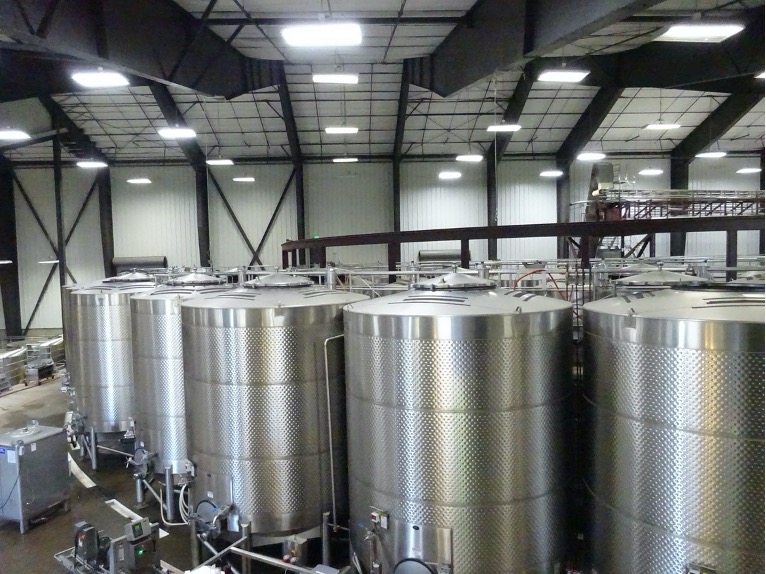
In a winery liquidation, the wine and the equipment can’t be sold independently. Bulk wine has to be sold and moved before the tanks holding it can be sold and removed, and the tanks and refrigeration have to keep running until it is. The sequence affects both values and how long the liquidation takes. It is one reason I prefer to value the inventory and the equipment together when the assignment allows.
Questions to Ask Before You Rely on an Inventory Value
If you’re a lender, an attorney, or a receiver looking at a wine inventory value, a handful of questions will tell you a good deal. Which premise of value was used, and does it match the situation you’re actually in? How much of the inventory is cased goods, shiners, and bulk, and was each valued in its own market? Was the wine sampled, by whom, and how much of it? What selling period was assumed, and does it account for the buying calendar? Who holds the licenses, the bond, the label approvals, and the trademarks, and are they part of the sale? And does the conclusion reflect today’s market, or the one that existed when the loan was made?
Fair market value and liquidation value can be very far apart right now, and the gap is wider for wine than for most collateral I see. None of that means the wine can’t be sold. It means the plan for selling it, and the value placed on it, should start from the market as it is.
I’m glad to talk through any of these situations. You can read more about our appraisal review and expert witness services, see the industries we serve, or contact me directly.