 When a bank or asset-based lender calls about an equipment appraisal on a large commercial fleet, the conversation almost never starts with “what’s it worth.” It starts with logistics. How do you inspect 2,000 specialty trailers spread across five operating yards in three states? What about the 140-tractor long haul fleet where, on any given inspection day, half the trucks are somewhere between Los Angeles, Phoenix, Salt Lake City, and Portland? And the question that really matters for the credit officer reading the report: how do you trust the numbers when advance rates and borrowing base certificates are riding on the conclusion?
That’s where mass appraisal methodology comes in. And specifically, statistical sampling, which I picked up at KPMG before I ever picked up an appraisal textbook.
This case study uses generalized descriptions of the assignments involved; the methodology and the technical details remain accurate.
Statistical Sampling: Beyond the M&E Curriculum
Attorneys, CPAs, and credit officers are often surprised to learn that statistical sampling isn’t included in most standard machinery and equipment appraisal curriculum. It isn’t in ASA’s ME201 or ME202. It isn’t in the advanced ME203/204 case studies. It isn’t in ME207 Advanced Cost Approach or ME215 Financial Reporting. It isn’t in the Master Personal Property Appraiser program I went through at the National Auctioneers Association either.
ASA’s equipment appraisal courses are well-designed and rigorous. But the M&E appraisal profession has historically built its training around individual-unit work: research the asset, find your comps, adjust for condition and age, and conclude a value. That approach works beautifully for one CNC machine, one walnut sheller, one Peterbilt, or even one manufacturing facility. It runs into trouble when the assignment is 2,347 trailers.
Audit Sampling
Appraising a large number of similar assets calls for a different system. For mass appraisals, statistical sampling is an efficient and effective tool.
I learned audit sampling at KPMG, where I spent several years auditing banks, mortgage bankers, manufacturers, ag co-ops, and distributors. You can’t test every transaction in a bank’s loan portfolio or every inventory item or every invoice in a manufacturer’s payables, so you sample. The sampling has to be designed in a way that lets you draw a defensible conclusion about the population from the subset you actually tested.
Appropriate and reliable sampling depends upon a well-established body of statistical theory, with its own textbooks, its own math, and its own academic literature. Bringing that toolkit into M&E appraisal is one thing that differentiates my fleet appraisal reports from a lot of others.
Once I made the connection between audit sampling, mass appraisal, and large fleet inventories, working any other way feels like guessing rather than determining a credible opinion of value.
The Inspection Problem Lenders Should Know About
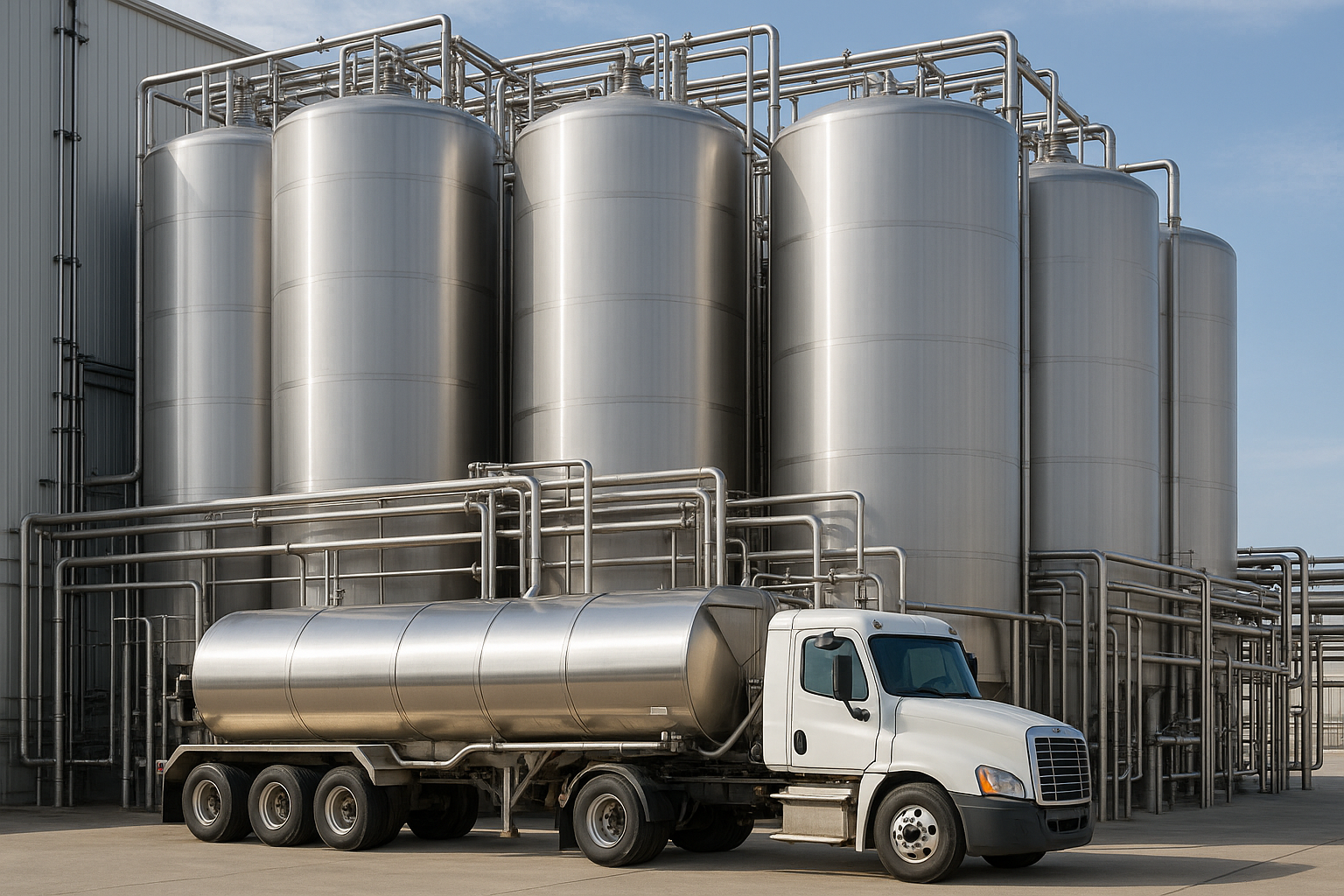
Trucking and trailer fleets share a basic operational reality. A meaningful percentage of the equipment is never in one place at the same time.
In a recent assignment for a California regional bank, the in-scope fleet was 2,347 active rental units across 89 distinct asset categories at three operating yards in the Central Valley. In an earlier martial dissolution case, a carrier with terminals in California, Nevada, and Arizona had roughly 140 tractors, 350 trailers, and assorted dollies, forklifts, and support vehicles. Trailers in particular tend to “float” between locations rather than being assigned to specific terminals.
I’ve deliberately scheduled smaller fleet inspections deliberately for early mornings and weekends, specifically so the maximum number of units would be on site, and even then some equipment was always out in the field on inspection day. You can plan around the problem, but you can’t eliminate it. So the practical question becomes: how do you produce a USPAP-compliant opinion of value on the entire fleet, including the units you didn’t physically lay eyes on, and present it in a form that survives credit committee review and (if it ever comes to it) an appraisal review by another professional?
The answer is mass appraisal methodology that is designed properly, implemented appropriately, and reported clearly.
Mass Appraisal
Mass appraisal is the systematic valuation of a large number of assets using standardized procedures, common data, and statistical testing. That’s the textbook definition that underlies USPAP Standard 5: Mass Appraisal, Development, and Standard 6, Mass Appraisal Reporting. The practical translation: you sample the fleet carefully, value the sample, and extrapolate the conclusions to the rest of the population using a statistical framework you can defend if anyone asks.
For a credit team evaluating fleet collateral, the approach provides three important benefits:
Cost. Sampling produces reliable conclusions at a fraction of the cost of a full census inspection. On a 2,000-unit fleet, that difference is real money, and it can determine if an appraisal is even economically feasible.
Defensibility. A value conclusion grounded in accepted sampling parameters and a stated confidence level holds up under scrutiny. A list of unsupported figures does not. I’ve reviewed plenty of fleet appraisals over the years where the sampling methodology was either undisclosed or, on closer inspection, turned out to be a convenience sample dressed up to look like something more rigorous.
Repeatability. The same sampling framework can be applied year over year, which matters when a lender wants updated values for an annual revaluation, a borrowing base certification, or routine portfolio monitoring.
The Statistical Backbone
A sampling plan for a large fleet appraisal depends on two standard and widely used statistical procedures: the Cochran formula and the Neyman allocation.
Cochran’s Formula
Cochran’s formula for stratified sampling sets the minimum sample size needed to hit a target confidence level and margin of error. For most fleet collateral lending assignments, the target is a 95% confidence level with a margin of error of about ±10% of the mean unit value. That precision level is consistent with what’s accepted for large fleet appraisals in collateral lending work.
Neyman Optimal Allocation
Neyman optimal allocation distributes the inspection units across strata. The math weights both the size of each stratum and the variability of values within it. In English: more inspection effort goes where the values are uncertain; less goes where the population is homogeneous and predictable. A stratum of 200 nearly identical 28-foot dry vans needs less per-unit inspection than a stratum of 30 customized produce hoppers, each with its own rebuild history.
Sampling Plan Example
For the 2,347-unit trailer fleet I mentioned earlier, the resulting sampling plan called for 247 unit inspections across 89 strata, with a minimum of one unit per stratum so every asset type in the fleet was represented. At 247 inspected units, the resulting fleet-level value conclusion carried a 95% confidence level with a margin of error of approximately ±10% of the mean unit value. In plain language: if the same inspection-and-valuation process were repeated 100 times under the same conditions, 95 of those repetitions would land within 10% of the fleet value.
That’s a statistical statement a credit committee can feel comfortable with. It’s also a statement most fleet appraisal reports don’t include, usually because the appraiser didn’t design the inspection that way to begin with.
Differences in Sampling: Random, Haphazard, and Convenience
Once the sample size is set, the next question is how an appraiser might choose the units to inspect. Let’s take a look at three approaches most discussed in appraisal literature. The differences matter.
Convenience sampling is what you get when an inspection includes mostly the easy ones. The trucks parked closest to the gate. The trailers that look the cleanest. The units that happen to be easy to photograph from where the inspector is already standing. It’s biased toward whatever’s convenient, and it produces value conclusions that no credit committee should rely on. It’s also exactly what a competent appraiser will avoid and an appraisal reviewer will catch.
Random sampling requires that every unit in the population have a known and equal probability of selection. For true random sampling, you’d pre-assign a random selection to each physical asset, then locate and inspect those specific units during the inspection. In a 2,000-unit fleet spread across active yards with trucks rolling in and out, that’s not just impractical. It’s impossible.
Haphazard sampling lets the inspector move through the yard in an unscripted path, picking up units as they’re encountered, without conscious bias toward newer, cleaner, more accessible, or higher-value equipment. The inspector isn’t seeking out or avoiding any particular unit. After the fact, the selections get matched back to the asset register by VIN or serial number.
For fleet valuation, haphazard sampling produces results that are statistically equivalent to random sampling, provided the inspector maintains discipline against selection bias throughout. This is the accepted standard for large fleet appraisals in the M&E profession and is consistent with the guidelines of the American Society of Appraisers.
For a lender, the distinction between these sampling practices is critical. A fleet appraisal that says “I inspected 50 trucks” without disclosing how those 50 were selected isn’t really telling you what you need to know.
Trucks and Trailers That Aren’t There
How does sampling help an appraiser factor in the units that aren’t on the yard on inspection day?
The short version: You set the sample size at the stratum level rather than the individual-unit level.
If the plan calls for nine inspections in a particular tractor stratum, and seven of those units are on the yard while two are out on hauls, the sample is still valid as long as those seven inspected items fairly represent the stratum and the missing two items are documented in the asset list with VIN, year, make, model, odometer, engine, and configuration data. The inspected units can then serve as the basis for value extrapolation to the uninspected units of the same type.
Documentary Evidence
The documentary evidence does real work here. Maintenance files, titles in the fleet management records, fixed asset registers, and prior arm’s-length sales transactions all supply information about the uninspected units. The inspected units serve as a check on the reasonableness of those documents.
If the maintenance file for an inspected truck matches the truck’s actual condition on the yard, the maintenance file for the truck still on the road is probably reliable too. While all reputable appraisers acknowledge the importance of source-document reliability, auditors think about source-document reliability constantly — and my CPA and audit background hardwired this into my own appraisal analysis.
A Mass Appraisal Report
And the report discloses everything. USPAP Standards Rule 6-2 reminds appraisers to document what was inspected, what was extrapolated, which documents were relied on, the sampling design, the confidence level, the margin of error, and any extraordinary assumptions. Disclosure protects the appraiser, but more importantly, it gives the credit officer the information they actually need to make an underwriting decision.
When a mass appraisal equipment report lands on a credit underwriter’s desk, the mass appraisal methodology is explicit. The report states the sampling design, the resulting sample size, and the confidence parameters that follow from it. It identifies the market-evidence sources used in the sales comparison approach, including internal transaction records when available, plus dealer listings, auction results, and recognized price guides like NADA Commercial Truck Guide, TruckPaper, Ritchie Bros., and Machinery Trader. Value conclusions are presented at both the asset-type level and the aggregate fleet level. Extraordinary assumptions are spelled out where they apply.
Compliance with Standards
A mass appraisal report based on appropriate statistical sampling complies with USPAP and the standard of care set by the Machinery and Technical Specialties Committee of the American Society of Appraisers, and where the assignment requires it, with the Royal Institution of Chartered Surveyors (RICS) Valuation Professional Standards and current International Valuation Standards.
For the lender, that disclosure has practical consequences. The credit team can read the report, see exactly how the values were arrived at, and have a defensible basis for advance rates, borrowing base calculations, and ongoing portfolio monitoring.
Other Approaches Can Fall Short
As far as I know, statistical sampling isn’t part of the M&E appraisal training and few other equipment appraisers seem to use these techniques. Instead, according to discussions with other appraisers and considering the appraisal reviews I’ve done over the years on other fleet appraisals, I’ve noticed recurring patterns in large fleet valuations. Some appraisals attempt a full census inspection and either blow the budget, miss assets, or both. Others might use what amounts to a convenience sample and avoid disclosing the sampling method. Others lean too much on management-provided data with limited — or no — independent verification.
While some of these approaches might be reasonable for some assignments, they could create a real problem for others. For no appraisal assignment, however, would these appraisal choices produce the statistically grounded, fully disclosed conclusion that a large fleet collateral lending engagement actually needs. For lenders and credit officers, a fleet appraisal based on a valid sampling toolkit fills the reliability gap.
Closing Thoughts for Lenders and Credit Officers
Fleet equipment appraisal for collateral lending isn’t about kicking every tire. It’s about designing an inspection and analysis plan that’s statistically sound, clearly disclosed in the report, and tied to real market evidence, so the credit committee can make decisions based on value developed with the same rigor as any other piece of the underwriting file.
If you’re a banker, an asset-based lender, or a collateral lender working on a transaction involving a commercial fleet — over-the-road trucking, agricultural specialty trailers, construction equipment, or any other large group of similar assets — give us a call at 530.795.5536, or submit your appraisal request through the website. We’re happy to talk through the specifics of the engagement and the appropriate scope of work.
Jack Young, FASA, MRICS, CPA
NorCal Valuation Inc.