

It’s a huge honor to be elected by my peers as the first discipline governor to represent #ASAARM. The ASA Newsroom created a press release highlighting the positive growth of the Appraisal Review and Management discipline that made this position possible. I’ve provided the entire article in this post. You can read the original article at…Read More

ACF CARB Regulations & Vehicle Values
ACF: The next appraisal chapter in the continuing fleet emission technology story The California Advanced Clean Fleets regulation intends to convert nearly 30% of the medium- and heavy-duty fleet vehicles operating in the state—including 100% of drayage vehicles—to zero-emission vehicles (ZEVs). Equipment appraisers need to be aware of vehicle categories affected, technology hurdles that must…Read More
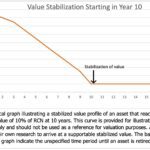
Stabilization of Value: Expanding the Appraisal Lexicon
In many of my appraisals, particularly for used in litigation, I’m frequently asked to justify the opinion of value for equipment that has outlived its expected life. Part of the general confusion can be attributed to the common misunderstanding between an accounting depreciation schedule and the practical value of machinery or equipment, including the oversimplification…Read More

Eminent Domain: Processing & Manufacturing Facilities
More than one legal organization expects that the Infrastructure Investment and Jobs Act (IIJA) and the Inflation Reduction Act (IRA) approved by the 117th Congress will lead to a significant increase in eminent domain activity. These investments in public works – in the industries of transportation, energy, water resources and broadband – are expected to…Read More
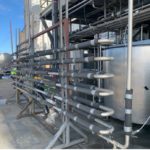
Spray Dry Technology: Atomizers and Evaporators
We regularly appraise food processing plants, and one constant is that they are all fascinating. From the basics of rice and almond processing, the specialty equipment of row-crop packaging and winemaking, to the intricacies of legacy facilities, I remain amazed by the technology. When I was hired by a CPA to appraise his client’s evaporation…Read More

New ASA ARM at NorCal Valuation
Jo Crescent, NorCal Valuation’s operations manager and co-owner, earned her ASA in Appraisal Review and Management (ARM) in January. In addition to full ARM accreditation, the American Society of Appraisers offers two other options for those interested in ARM: a discipline-specific specialty designation for current Accredited Senior Appraisers in its other disciplines and an ARM…Read More

Throwback Thursday: Campbell’s Sacramento Legacy
In 2014, I walked into the old Campbell’s Soup plant in south Sacramento with a camera, clipboard, a pad of paper, a limited asset list, and noted appraiser Bob Podwalny. Our assignment was a retrospective 2013 property tax appraisal. Comstock’s article about the facility’s redevelopment references the plant as one of the “oldest and most…Read More

Jack Young Named American Society of Appraisers “2021–2022 Appraiser of the Year”
The American Society of Appraisers awarded its 2021–2022 Appraiser of the Year recognition to Jack Young, CPA, ASA Machinery and Equipment and Appraisal Review, and Carol Akers Klug, MBA, ASA Business Valuation. ASA International President David Crick presented the awards at the Association’s 2021 International Conference in Las Vegas. Each year, this award recognizes two…Read More
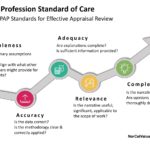
Appraisal Review Standard of Care for Attorneys
The Association of Certified Family Law Specialists published this article in their journal’s Summer 2021 ACFLS Family Law Specialist. Appraisal review is, first and foremost, a standardized process that provides guidelines for assessing the overall quality of an appraisal relative to applicable standards, while concurrently addressing the degree to which that appraisal is credible, logical, and…Read More
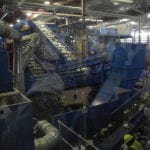
Valuing Recycling Equipment: Case Study
Considering obsolescence for recycling equipment Following the most recent transfer of ownership, an expansive multi-generational waste management and recycling corporation in central California needed a business valuation for gift tax return. While a business valuation can be performed without an equipment valuation, in the case of machinery-heavy industries, the prudent option is to involve…Read More

ASA To Resume Pre-Pandemic Global Expansion Efforts
SOURCE American Society of Appraisers – ASAReston VA, July 9, 2021 / PRNewswire ASA announces plan to resume pre-pandemic global expansion efforts, continuing to build strategic partnerships with international professional assessment organizations (OPVs). Such connections with like-minded organizations and like-minded organizations will help build global public trust of members and the evaluation profession through upholding…Read More

Streamline Business Dissolutions with Shared Appraisal Expert
Shareholder and business partner dissolutions occur for a multitude of reasons, including disputes. Examples of dispute situations include a shareholder mishandling corporate information, a partner acting inappropriately, or a personality conflict among shareholders. In business disputes of this kind, a business valuation (BV) is the simplest and most cost-effective way to determine the value of…Read More
- 1
- 2
- 3
- …
- 14
- Next Page »